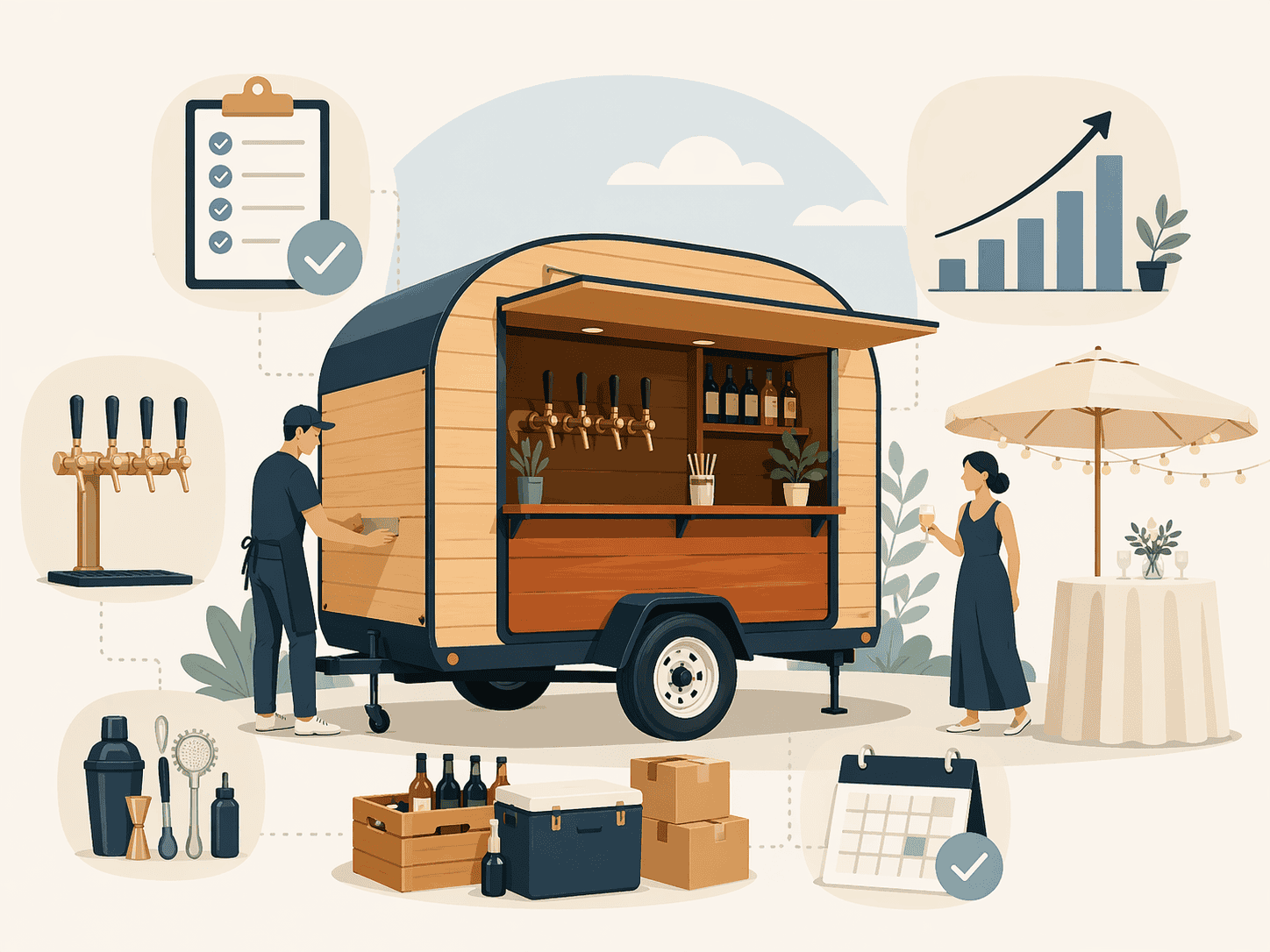
A mobile bar business looks simple from the outside: a polished trailer, a few taps, smiling guests, and drinks served under string lights.
Behind that clean setup, though, is a real business with real numbers. You need the right trailer, insurance, local permits, beverage systems, staffing plan, pricing model, and a steady way to book events before the busy season fills up.
The good news is that this type of business can be leaner than opening a fixed bar. You’re not paying for a dining room, permanent buildout, full-time front-of-house team, or year-round utility bills. But it still needs structure. If you treat it like a weekend side hustle forever, the numbers get messy fast. If you build it like a service business from the beginning, it becomes much easier to price, sell, and scale.
This guide walks through the practical side of starting and growing a mobile bar business, from startup costs and setup decisions to local marketing and repeat bookings.
Key Takeaways
- A mobile bar business can serve weddings, corporate events, private parties, festivals, brewery activations, and venue partnerships.
- Startup costs usually fall into four buckets: trailer/build, equipment, compliance, and marketing.
- Your local alcohol laws matter. Some operators serve alcohol directly, while others run a dry-hire model where the client supplies the alcohol.
- Pricing should account for travel, setup, labor, beverage service complexity, insurance, cleaning, and wear on equipment.
- The businesses that grow fastest usually have clear packages, strong local partnerships, and a consistent booking process.
What a Mobile Bar Business Actually Includes
A mobile bar business is a portable beverage service that brings the bar experience to an event location. That may mean beer and wine service from a tap trailer, signature cocktails at a wedding, mocktails for a brand activation, coffee service at a morning event, or a combination of beverage options depending on the market.

The business model can vary. Some owners provide only the trailer and service setup, while the client or venue supplies the alcohol. Others handle bartending, menu planning, mixers, glassware, ice, garnish prep, tap service, and staffing. Before you buy equipment or quote your first event, decide which version you’re building because it affects your licensing, pricing, insurance, and workflow.
A strong mobile bar setup usually has three parts working together: the physical trailer or bar unit, the service package, and the booking system. The trailer gets attention, but the process behind it is what keeps events profitable.
Common event types for mobile bars
Weddings are often the first market new operators think about, and for good reason. Couples want something that looks good in photos, supports guest flow, and feels more personal than a folding table with coolers behind it. Corporate events are another strong fit because companies often care about branding, presentation, and smooth service.
You can also build packages for backyard parties, venue open houses, fundraisers, farmers markets, brewery events, rehearsal dinners, showers, birthdays, golf tournaments, and community festivals. A visual service menu or simple comparison table on your website can help people understand which package fits their event.
The key is not trying to serve every event the same way. A 40-person backyard party and a 250-person wedding need different tap counts, staffing levels, bar flow, and prep time.
Wet hire vs. dry hire
In a wet-hire model, the mobile bar business may supply alcohol, bartenders, mixers, and service. This can be more profitable, but it also tends to involve stricter licensing and insurance requirements. Alcohol rules vary heavily by state, county, and city, so this is not an area to guess.
In a dry-hire model, the client supplies the alcohol and the mobile bar business provides the trailer, equipment, setup, and sometimes bartending. This can simplify some parts of the business, though you still need to check local laws and insurance requirements. For a deeper look at permits and compliance, it’s worth reviewing a dedicated guide to mobile bar legal requirements before choosing your operating model.
Some businesses offer both options depending on the venue and event type. That can work well, but only if your contracts make responsibilities clear.
Mobile Bar Business Costs to Plan For
Startup costs for a mobile bar business can vary widely because the setup can be simple, premium, or highly customized. A basic portable bar setup may be much cheaper than a purpose-built tap trailer, but it may not create the same visual impact or speed of service. A trailer can cost more upfront, yet help you charge stronger event fees if it looks polished and performs well on-site.
The U.S. Small Business Administration recommends estimating startup costs before seeking funding or deciding when the business may become profitable. That advice applies here because trailer costs are only one part of the full budget. You also need to account for licensing, insurance, staffing, marketing, storage, cleaning, repairs, and working capital before your first few events are paid in full.
A useful way to build your budget is to create four columns: one-time startup costs, monthly overhead, per-event costs, and future upgrade costs. That simple table can keep you from underpricing early bookings.
Trailer, build, and equipment costs
The trailer or mobile bar unit is usually the biggest startup expense. Some operators convert vintage horse trailers, campers, cargo trailers, or teardrop-style builds. Others buy a purpose-built tap trailer because it already supports beverage service, storage, guest-facing presentation, and event mobility.
A professional setup may include taps, draft lines, jockey boxes or cooling systems, sinks, water tanks, drainage, electrical components, lighting, counter space, shelving, service windows, branded finishes, signage, and secure storage. If you’re comparing trailer types, a guide on choosing a tap trailer for sale can help you think through beverage options, tap capacity, and event use cases.
Don’t forget the small items. Cocktail shakers, bar mats, pour spouts, garnish trays, ice bins, menu signs, trash bins, towels, extension cords, cleaning supplies, backup fittings, and spare hoses may not seem expensive individually, but they add up quickly.
Business setup and compliance costs
Beyond the trailer, you may need a business entity, local business license, seller’s permit, event permits, alcohol-related approvals, health department approvals, server training, insurance, and contract templates. Requirements depend on your location and the way you serve alcohol.
If your business sells or distributes alcohol, federal and state requirements may apply. The Alcohol and Tobacco Tax and Trade Bureau has information for alcohol businesses, including registration and compliance topics through its TTB business resources. This should not replace legal advice, but it’s a smart place to start learning the regulatory language.
Insurance is another major line item. Many venues will ask for proof of general liability coverage. If alcohol is involved, liquor liability may be required. If you tow a trailer, commercial auto or trailer coverage may also come into play. Build these costs into your pricing instead of treating them as afterthoughts.

Monthly and per-event operating costs
Monthly overhead can include storage, website hosting, booking software, accounting software, phone service, insurance premiums, loan payments, routine maintenance, and advertising. Even if you don’t have events every weekend, those costs continue.
Per-event costs include fuel, ice, mixers, garnishes, staff, cleaning, disposables, cups, napkins, travel time, setup time, breakdown time, and equipment wear. If you use contractors or bartenders, include payroll taxes or contractor fees in your pricing model.
Here’s a simple cost-planning table you could recreate in WordPress as a graphic or downloadable checklist:
| Cost Category | Examples | When It Applies |
| Startup | Trailer, taps, branding, bar tools, website | Before launch |
| Compliance | Licenses, permits, insurance, training | Before bookings and renewals |
| Monthly overhead | Storage, software, insurance, marketing | Every month |
| Per-event | Fuel, ice, labor, cleaning, supplies | Every booking |
| Growth | Extra taps, second trailer, staff training | After demand grows |
The goal is not to make your first budget perfect. It’s to avoid quoting based only on what a customer thinks the trailer rental should cost.
Setup, Equipment, and Compliance Basics
Your setup should make service faster, cleaner, and easier to repeat. A mobile bar may look stylish to guests, but behind the counter, it needs to function like a compact workstation. Every inch matters.
Start with your service menu. Beer and wine service needs different equipment than craft cocktails. Draft cocktails need different planning than canned mocktails. Coffee service has its own power, water, and workflow needs. Once you know what you’ll serve most often, you can make better choices about taps, refrigeration, storage, prep surfaces, and cleaning systems.
Think of your setup as a process graphic: arrival, parking, leveling, setup, ice and beverage loading, service, cleanup, breakdown, and departure. If one step is clunky, the whole event feels harder.
Core equipment checklist
At minimum, most operators need a mobile bar unit, beverage storage, coolers or cooling systems, drinkware plan, bar tools, lighting, signage, cleaning supplies, waste containers, and a secure transport plan. If you use draft systems, you’ll also need taps, lines, couplers, CO2 or gas setup, and a cleaning process.
For trailer-based operators, layout affects speed. Staff need to reach taps, ice, garnish, cups, napkins, and trash without constantly crossing paths. Good design reduces bottlenecks during cocktail hour, which is often when the bar gets hit hardest.
A breakdown of mobile bar trailer systems can help you think through draft systems, refrigeration, plumbing, electrical, and storage from an operations point of view.
Health, safety, and alcohol rules
Health and alcohol compliance can feel tedious, but it protects the business. If you serve consumable beverages, local health departments may care about handwashing, water supply, wastewater, cleaning, food-safe surfaces, temperature control, and sanitation. Requirements can change by location and event type.
Alcohol rules are even more location-specific. Some states require licensed caterers or bartenders. Some venues hold their own liquor license. Some events require temporary permits. Some operators only provide the trailer and staff while the client supplies alcohol. Before you publish packages, confirm what you can legally offer.
A written compliance checklist is helpful. Include permit deadlines, venue certificate requirements, bartender training, insurance documents, ID-checking policy, weather plan, and responsible service rules. The SBA’s guide to licenses and permits is a useful starting point for understanding how local, state, and federal requirements may apply.
Contracts and event policies
A mobile bar contract should spell out what’s included, what’s not included, payment schedule, cancellation terms, weather policy, access requirements, parking needs, power needs, alcohol responsibilities, staffing, service hours, and damage responsibility.
Be specific about timing. For example, “four hours of bar service” is not the same as “four hours on-site.” You may need one to two hours for setup and another hour for breakdown. If travel is involved, build that into the event quote or list a clear travel fee.
Your policies should also cover guest count changes. A quote for 75 guests should not silently become a 150-guest event with the same staff, ice, cups, and service window. Set a deadline for final guest count and package changes.
How to Price and Book More Events
Pricing a mobile bar business is partly math and partly positioning. If you only price based on what competitors charge, you may miss your real costs. If you only price based on costs, you may miss the value of presentation, convenience, and guest experience.
A better approach is to build packages around event needs. For example, you might offer a simple trailer rental, a beer-and-wine service package, a signature cocktail package, and a premium full-service package. Each level should clearly explain guest count range, service hours, staffing, setup, cleanup, and add-ons.

Packages make it easier for customers to compare options without asking for a fully custom quote every time. They also help you avoid rebuilding your pricing from scratch for every inquiry.
Build your pricing formula
A practical pricing formula starts with your base event fee. This should cover trailer use, admin time, setup, breakdown, cleaning, and a reasonable profit margin. From there, add labor, travel, supplies, beverage complexity, guest count, extra service hours, and rush fees if needed.
For example, a backyard party 20 minutes away with 50 guests and beer service is very different from a 200-person wedding 90 minutes away with two bartenders, signature cocktails, and late-night breakdown. Your pricing should reflect that.
You may also want minimums for peak dates. Saturdays during wedding season are limited inventory. If you book a low-margin event on a prime date, you may block a better opportunity. This is where a booking calendar and seasonal pricing can protect revenue.
Create packages people can understand
Simple package names can help: “Trailer Rental,” “Tap Service,” “Wedding Bar,” “Corporate Pour,” or “Full-Service Bar.” Avoid clever names that confuse people. Clear beats cute when someone is trying to plan an event quickly.
Each package should answer the questions people ask first:
- How many guests does this support?
- How many hours are included?
- Are bartenders included?
- Are alcohol, mixers, ice, cups, and garnishes included?
- What does the client need to provide?
- How far do you travel?
- What happens if it rains?
If you want to make the page more visual, add a side-by-side package table with “best for” notes. This makes the buying decision faster and reduces back-and-forth emails.
Build a local booking pipeline
Most mobile bar bookings come from local trust. People want to know you’ll arrive on time, look professional, follow venue rules, and keep the line moving. Your marketing should make that obvious.
Start with a strong website, a complete Google Business Profile, local photos, package pages, event galleries, and clear inquiry forms. Google’s guidance for service-area businesses recommends setting accurate service areas, which matters for businesses that travel to customers instead of serving from a storefront.
Then build relationships with venues, wedding planners, caterers, photographers, breweries, florists, DJs, and event rental companies. A planner who trusts you can send multiple clients a year. One venue open house can turn into a full season of leads.
A local marketing plan for a mobile tap trailer business can also help you prioritize the right channels instead of spreading your time across every social platform.
Growth Tips for Building a Stronger Mobile Bar Brand
A mobile bar business grows when the experience becomes easy to remember and easy to refer. That doesn’t mean you need a complicated brand. It means your look, packages, communication, and service should feel consistent from the first website visit to the last drink poured.
Start by choosing a clear niche. You might focus on weddings, corporate events, brewery activations, luxury private parties, non-alcoholic events, or venue partnerships. You can still accept other bookings, but your marketing becomes stronger when people understand what you’re best at.
A focused brand also helps with photos. A clean gallery of real events can sell your service faster than a long paragraph. Show the trailer in place, the bar setup, the guest flow, detail shots, and the kind of events you want more of.
Make your service easier to buy
Many event businesses lose leads because the inquiry process is too vague. A couple planning a wedding does not want to wait four days just to learn whether you serve their area or fit their budget. Give people enough information to take the next step.
Your website should include service areas, package starting points, event types, FAQs, photo examples, inquiry form, and a simple explanation of how booking works. You don’t have to list every price publicly, but you should give enough context to filter poor-fit inquiries.
Use an inquiry form that asks for event date, location, guest count, event type, service hours, venue name, alcohol plan, and desired package. Those fields help you quote faster and avoid long email chains.
Turn every event into future marketing
After each event, capture assets. Take photos before guests arrive, get a short testimonial, record notes about what worked, and ask vendors if they’re open to cross-promotion. One event can become a gallery update, social post, venue relationship, review request, and case study.
Reviews matter because mobile bar customers are often making a trust-based decision. They’re not just renting equipment. They’re relying on you for a visible part of their event. Ask for reviews shortly after the event while the experience is still fresh.
You can also build seasonal content around the questions customers already ask: how much alcohol to buy, how many bartenders are needed, what works for outdoor weddings, how to plan a corporate happy hour, or how to serve mocktails at a dry event. HubSpot’s guide to building a marketing plan is a useful reference if you want to organize campaigns, goals, and budget in one place.
Know when to scale
Scaling does not always mean buying a second trailer right away. It may mean raising prices, improving systems, training backup staff, adding a second bar station, partnering with another vendor, or narrowing your service area to reduce travel strain.
Look at your numbers before making big moves. Which event types are most profitable? Which packages are easiest to deliver? Which venues produce the best leads? Which months are slow? Which add-ons have strong margins?
Once the first setup is consistently booked and your process feels repeatable, expansion becomes safer. That might mean a second trailer, a dedicated booking manager, a stronger website, paid local ads, or deeper venue partnerships. Growth should make the business cleaner, not more chaotic.