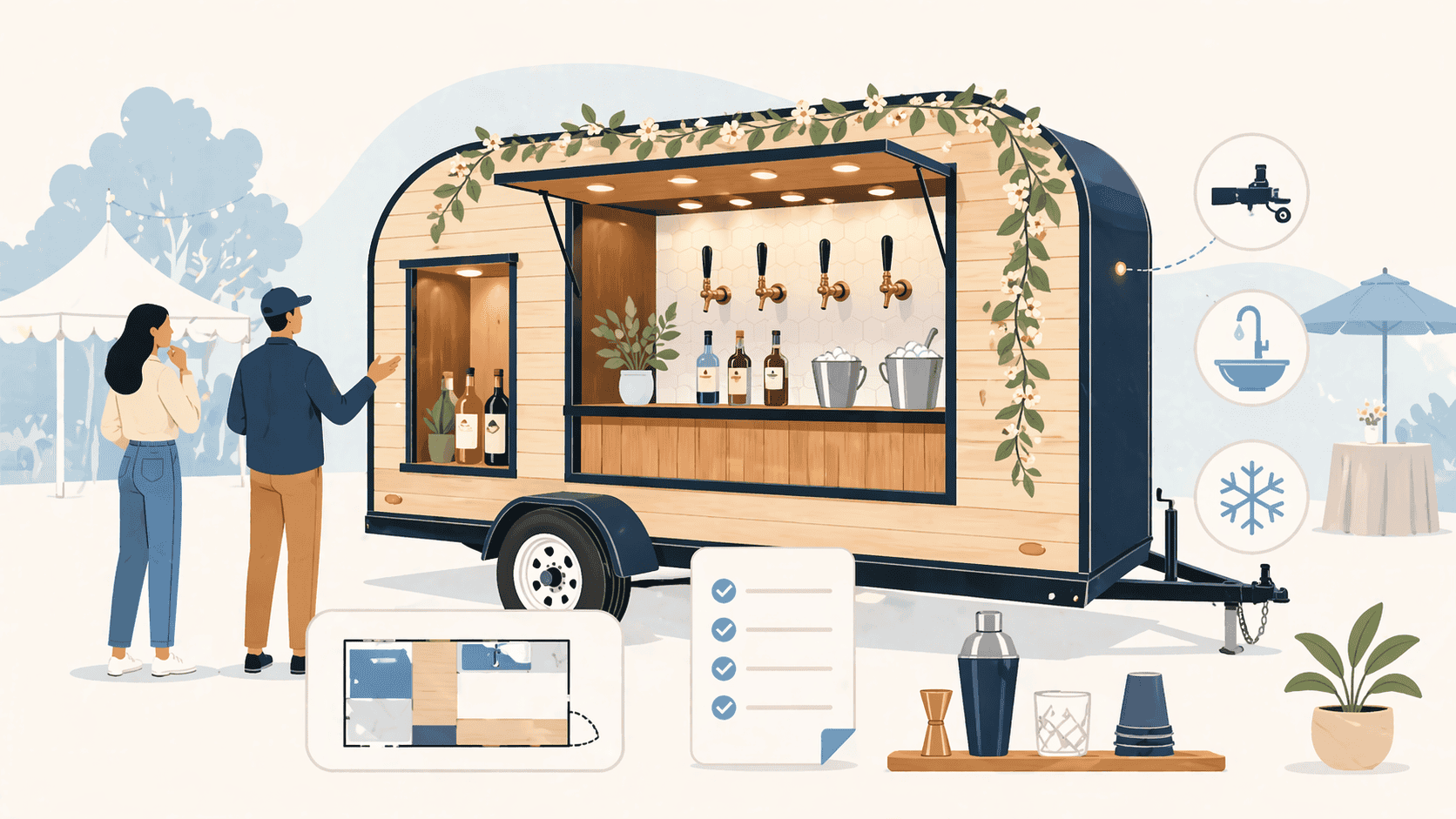
A mobile bar trailer can look simple from the outside: a polished trailer, a few taps, a counter, and a line of guests waiting for drinks. But the buying decision goes much deeper than the look of the trailer.
The right build can help a bar business serve weddings, corporate events, festivals, private events, and venue activations with less stress. The wrong setup can create bottlenecks, storage issues, permit headaches, and expensive changes after purchase.
This mobile bar trailer guide walks through what buyers should understand before choosing a trailer, comparing layouts, or pricing custom options. Whether you’re starting a mobile bar, adding a coffee trailer to your services, or looking at horse trailer mobile bars for a vintage concept, the goal is the same: buy a trailer that fits the way you’ll actually work.
Key Takeaways
- A mobile bar trailer should be planned around service speed, storage, power, water, ice, and staff movement.
- Buyers should compare mobile bars for sale based on use case, not just appearance.
- Permits, liquor rules, insurance, and venue requirements can shape your layout and equipment choices.
- A trailer built for cocktails may need a different setup than a beer, wine, coffee, or full bar concept.
- The best trailer is one that supports your menu, target events, tow vehicle, and long-term business plan.
What a Mobile Bar Trailer Actually Needs to Do
A mobile bar is not just a pretty booth on wheels. It’s a working beverage station that has to move safely, set up quickly, serve efficiently, and look professional under pressure. At a wedding, guests don’t care whether your sink placement made sense on paper. They care that the bartender can pour, mix, garnish, and take payment without creating a long line.

That’s why buyers need to think about the trailer as both a service tool and a marketing asset. It has to support the business behind it. A mobile bar trailer used for cocktail service at bridal events will not need the exact same setup as a mobile coffee unit at a morning market or a beer tap trailer serving a festival crowd.
Before comparing bar trailers for sale, write down how you plan to use the trailer most often. Will you cater private events? Book corporate activations? Serve coffee in high-foot-traffic areas? Partner with venues? Offer a portable bar package for weddings? The answers shape the layout, equipment, capacity, storage, and even the visual style of the build.
A helpful way to start is to separate your idea into three categories: what you’ll serve, where you’ll serve it, and how fast you need to serve. A cocktail bar may need prep space, mixers, garnish storage, ice, and a handwashing sink. A beer or wine trailer may prioritize taps, keg storage, cold holding, and fast pour flow. A mobile coffee setup may need espresso equipment, grinder space, power planning, water tanks, and a layout that keeps drinks moving during a morning rush.
It’s also worth looking at real build examples before making decisions. A gallery of completed custom mobile bar trailers can help buyers see how different layouts, finishes, counters, and serving windows work in practice. This kind of visual comparison makes it easier to picture what your own trailer will need.
Mobile Bar Trailer Guide to Layout, Equipment, and Capacity
A strong layout starts with the bartender’s workflow. Every step should feel natural: take the order, grab the drinkware, access ice, pour or mix, garnish, serve, and reset. When the layout is tight or poorly planned, staff lose time reaching across one another, turning around too often, or digging through storage while guests wait.
For a cocktail bar, think carefully about prep space, bottle wells, garnish containers, mixer storage, trash access, and where the POS system will sit. For a beer or wine setup, pay attention to draft lines, keg access, tap placement, cold storage, and drip management. For a mobile coffee trailer, the layout should account for espresso workflow, milk storage, grinder placement, knock box access, water needs, and a clean handoff point for finished drinks.
Match the trailer layout to the menu
The menu should guide the build. A simple beer and wine service may not need the same counter depth or storage footprint as a full bar. A craft cocktail menu with muddled drinks, syrups, citrus, and multiple mixers needs more working space than a basic pour-and-serve package.
If you plan to offer a full bar, don’t underestimate the amount of small equipment involved. You may need shakers, jiggers, strainers, muddlers, speed pourers, cutting boards, backup liquor storage, garnish trays, ice wells, rinse stations, and glassware or disposable cup storage. Each item needs a home inside the trailer.
For coffee, the equipment list changes quickly. A mobile coffee trailer may need a commercial espresso machine, grinder, water filtration, cold milk storage, cups, lids, syrups, cleaning supplies, and enough power to run the setup safely. Buyers interested in coffee service can compare purpose-built coffee trailers to see how a smaller beverage setup can still feel premium and event-ready.
Plan for ice, water, and cleanup
Ice is one of the most overlooked parts of mobile bar planning. It affects drink quality, service speed, and storage. If you’re serving cocktails, you’ll need enough ice for shaking, stirring, chilling, and serving. If you’re using a tap system that relies on ice for cooling, your setup should make refilling simple during a busy event.
Water is another major planning point. Many buyers focus on the visible bar counter first, then realize later that sinks, tanks, plumbing, and wastewater storage can affect the entire layout. Depending on your local health requirements and service model, you may need a handwashing sink, freshwater tank, gray water tank, and a plan for safe disposal.
The FDA Food Code is often used as a model by state and local authorities for food and beverage safety rules. Local requirements vary, but buyers should assume that sanitation, handwashing, clean water, and safe storage will matter when the trailer is inspected or reviewed by a venue.
Think in real event capacity, not just trailer size
Capacity is not only about how many kegs, bottles, or coffee cups fit inside. It’s about how many guests you can serve without slowing down. A small trailer can handle a premium private event if the menu is focused and the setup is efficient. A larger trailer can still struggle if the bartender has to cross the trailer repeatedly for every drink.
Estimate capacity by event type. A 40-person private party has different needs than a 200-guest wedding or a festival booth with constant foot traffic. For weddings, cocktail hour can create a sudden rush. For festivals, demand may rise and fall throughout the day. For corporate events, service often needs to feel polished, fast, and controlled because guests may only have a short window between presentations or networking sessions.
It helps to create a simple planning table for each event type. Include expected guest count, menu size, number of bartenders, ice needs, drinkware, storage, setup time, and breakdown time. This table can also become a useful visual for your internal planning or website content later.
Permits, Alcohol Rules, and Business Planning
A beautiful trailer will not protect the business if the legal side is ignored. Mobile bar operations can involve liquor rules, local permits, health department requirements, insurance, event approvals, zoning concerns, and venue-specific restrictions. The rules vary by city, county, and state, so it’s important to check requirements before you buy or build.

Many mobile bars operate in different ways. Some serve alcohol provided by the client or venue. Some work under a licensed caterer. Some only serve beer and wine. Others focus on non-alcoholic beverages, coffee, mocktails, soda, kombucha, or lemonade. Each model can affect what permits, certifications, and insurance you need.
Know your alcohol service model
If your mobile bar will serve liquor, beer, wine, or cocktails, get clear on your operating model early. Alcohol laws can be strict, and the trailer itself is only one part of the setup. You may need licensed bartending staff, liquor liability insurance, event permits, or approval from the venue.
The Alcohol and Tobacco Tax and Trade Bureau provides federal information for certain alcohol businesses, including permit and registration topics through TTB online services. That does not replace state or local guidance, but it’s a useful starting point for understanding that alcohol is a regulated category.
In many markets, a mobile bar business also needs staff training or responsible beverage service certification. If you hire bartenders, confirm whether they need state-approved training. For private events, ask whether the client, caterer, or venue is responsible for supplying alcohol. Getting this wrong can affect both compliance and profitability.
Build the business plan before the trailer wish list
A trailer purchase should connect to a clear business plan. The U.S. Small Business Administration explains that a business plan helps define how the business will operate, make money, and prepare for funding or partnerships through its business plan guidance.
For a mobile bar business, the plan should include your event types, target customers, pricing, service area, staffing, startup costs, insurance, marketing, and expected booking volume. Buyers often focus on the trailer price first, but the total startup picture may include branding, website work, glassware, bar tools, inventory, POS equipment, insurance, permits, photos, social media content, and towing equipment.
It’s smart to calculate several packages before buying. For example, you might offer a wedding cocktail package, a beer and wine package, a coffee trailer package, and a corporate mocktail bar. Each package will have different staffing, prep, supply, and margin considerations. Those numbers help you decide whether your trailer needs premium finishes, extra storage, more taps, or a simpler layout.
Confirm venue and event requirements
Venues can have their own rules, even when local permits are handled. Some require proof of insurance. Some require approved vendors. Some have power access limits, parking restrictions, load-in times, or alcohol service policies. Outdoor venues may also care about ground protection, generator noise, wastewater, and where the trailer can be positioned.
Before buying, talk to the kinds of venues you want to serve. Ask what they expect from mobile bars, bartending vendors, coffee trailers, or beverage carts. A venue coordinator can tell you what causes problems during real events, such as trailers that are hard to place, setups that need too much power, or bars that lack backup equipment.
This step can save money. If most of your target venues require a certain sink setup, insurance limit, or service footprint, you want to know that before finalizing the build.
Branding, Sales, and Event Fit
A mobile bar trailer has a rare advantage: it’s both equipment and advertising. Guests see it. Photographers capture it. Event planners remember it. If the trailer looks polished and fits the setting, it can support better bookings and stronger referrals.
That doesn’t mean every trailer needs to be flashy. The best design depends on the buyer’s market. A vintage horse trailer mobile bar may work well for rustic weddings, bridal showers, and farm venues. A clean white tap trailer may fit corporate events, premium private parties, breweries, and modern venues. A wooden bar finish may feel warmer for outdoor weddings, while stainless steel can signal durability and cleanliness behind the counter.
Choose a concept buyers can understand quickly
People should understand what you offer within a few seconds. If your business is a cocktail bar, the trailer, menu, and photos should make that clear. If your focus is coffee, don’t make people dig to figure out whether you serve espresso, cold brew, or specialty lattes.
This matters for both event planners and retail-style bookings. A planner looking for a wedding bar trailer wants to know whether you can serve cocktails, beer, wine, or mocktails. A corporate client may care more about presentation, speed, insurance, and whether your setup fits the venue’s brand standards. A festival organizer may care about capacity, permits, and whether you can serve a crowd.
Buyers comparing tap trailers for sale should look beyond the number of taps. Think about how the trailer will photograph, how it will look next to a venue, and whether the setup can support the menu you plan to sell most often.
Build a marketing plan around real photos and simple packages
Mobile businesses need trust before people book. Real photos, clear packages, and social proof can do more than a clever name alone. Once your trailer is built, plan to photograph it at different event types: wedding, backyard party, corporate gathering, festival booth, and styled shoot if possible.
A Google Business Profile can also help a local service business appear on Google Search and Maps. Google notes that businesses can create a free profile through Google Business Profile, which is useful for mobile service providers that serve customers in a defined area.
Social media matters too, especially for a visual business like a mobile bar. Post the trailer setup, menu examples, behind-the-scenes prep, event clips, and bartender moments. Show how the trailer fits different venues. A bride, planner, restaurant partner, or corporate buyer should be able to picture your bar at their event.

Price the trailer against the business model
A premium trailer may make sense if it helps you command higher booking rates, win better events, or reduce setup labor. A simpler trailer may make sense if you’re testing a concept, serving a narrow menu, or focusing on smaller private events. There is no single right choice.
What matters is whether the trailer supports the revenue model. If you want to book high-end weddings, the trailer should look the part and support a polished cocktail service. If you want to work markets with a mobile coffee concept, speed, equipment reliability, and repeat customers may matter more than dramatic styling.
Buyers should also think about add-on revenue. A bar trailer can support drink packages, bartender hire, mocktail service, coffee service, branded corporate drinks, champagne pours, beer service, wine service, or seasonal menus. The more clearly your trailer supports those offers, the easier it is to sell.
What to Check Before Buying Mobile Bars for Sale
When buyers search for mobile bars for sale or trailers for sale, it’s easy to compare photos first. Photos matter, but they don’t show everything. A trailer can look beautiful and still be awkward to tow, difficult to clean, or poorly matched to the business.
Start with structure and road readiness. Check the frame, tires, wheel condition, hitch, lights, brakes, weight, and tow vehicle requirements. If you’re considering a converted horse trailer, inspect the condition carefully. Vintage builds can be charming, but they may require structural updates, new flooring, plumbing, wiring, and food-safe surfaces.
Inspect the build quality and materials
Behind the counter, materials matter. Stainless steel is common in food and beverage settings because it’s durable and easier to clean. Wood can look warm and premium, but it should be placed thoughtfully so it doesn’t create sanitation or maintenance problems. Countertops, flooring, walls, sinks, storage, and service windows should all be designed for repeated use.
Ask about electrical and plumbing details. Where are outlets placed? How is power managed? Are tanks accessible? Can the sink be cleaned easily? Is there enough ventilation? Can equipment be serviced without tearing apart the trailer? These questions are not exciting, but they protect you from expensive changes later.
Buyers should also ask how the trailer handles bad weather. Events are not always sunny. A good setup should account for rain, wind, heat, dust, and uneven surfaces. Serving windows, awnings, counters, and storage should feel stable and practical outside of perfect showroom conditions.
Compare custom builds against ready-to-use options
A custom trailer gives buyers more control over layout, finishes, branding, storage, and equipment. That can be helpful if you already know your service model. For example, a cocktail-heavy business may want more prep space and garnish storage. A beer-focused business may prioritize taps and keg access. A coffee trailer may need careful power and water planning.
Ready-to-use trailers can be faster if the setup already matches your needs. But don’t buy speed at the cost of fit. If you’ll need major changes after purchase, the trailer may not be as affordable as it looks.
A useful middle ground is to start with a proven trailer type, then customize the details that matter most. The premium tap trailer category is a good example of how a specialized beverage trailer can be designed around event businesses rather than treated like a generic concession trailer.
Ask operational questions before signing
Before buying, walk through a real event from arrival to departure. Where does the truck park? How long does setup take? Where do staff store supplies? How do bartenders access ice? Where does trash go? How is wastewater handled? Where do guests line up? What happens if an equipment piece fails?
Also consider whether the trailer can grow with you. A startup may begin with private parties and bridal showers, then move into corporate events, festivals, restaurant pop-ups, or venue partnerships. Your trailer doesn’t need to do everything, but it should not block the natural direction of the business.
Finally, budget for the parts that don’t show in sales photos. Insurance, permits, equipment, tools, repairs, branding, website work, booking software, photography, and marketing can all affect the real startup cost. The trailer is the centerpiece, but the business succeeds because the full setup works.
What is a mobile bar trailer?
A mobile bar trailer is a portable beverage service trailer used for events, weddings, festivals, corporate gatherings, and private parties. It can be set up for cocktails, beer, wine, coffee, mocktails, or a mix of beverage services depending on the layout and equipment.
How much does a mobile bar trailer cost?
The cost depends on the trailer type, size, materials, equipment, plumbing, electrical work, and custom finishes. A basic setup may cost much less than a premium cocktail bar, tap trailer, or mobile coffee trailer with specialized equipment.
Do I need a liquor license for a mobile bar business?
It depends on your location and business model. Some operators work under venue rules, caterer licenses, temporary event permits, or client-provided alcohol arrangements, while others may need specific liquor licensing and certified bartenders.
What equipment should a mobile bar trailer include?
Common equipment includes a service counter, sink, water tanks, ice storage, beverage storage, bar tools, taps if needed, lighting, power access, and secure storage. A cocktail bar, coffee trailer, and beer tap trailer will each need a different equipment mix.
Are horse trailer mobile bars a good option?
Horse trailer mobile bars can be a strong choice for weddings, rustic venues, and vintage-style private events. Buyers should inspect the structure, towing condition, flooring, plumbing, and electrical work carefully before purchasing or converting one.
Can a mobile bar trailer serve coffee instead of alcohol?
Yes. Many mobile businesses use trailers for coffee, espresso, cold brew, tea, lemonade, mocktails, or other non-alcoholic beverages. A mobile coffee setup may need different power, water, storage, and equipment planning than an alcohol-focused trailer.
What should I check before buying mobile bars for sale?
Check the trailer’s structure, weight, tow requirements, plumbing, electrical system, sink setup, storage, counter space, materials, and service flow. Also confirm whether the layout fits your menu, event types, permits, and long-term business plan.